Classic french
White tip, natural base, a clean border. It sits best at medium length on a square or slightly rounded shape. As it grows the border moves with the nail and that shows — hence a refill every three weeks.
Guide · Nails
A white tip and a natural base — a design that has not changed in fifty years, yet is done today in a dozen variations. Here is what to ask for in the salon, which variation suits which length, and how french differs from baby boomer.
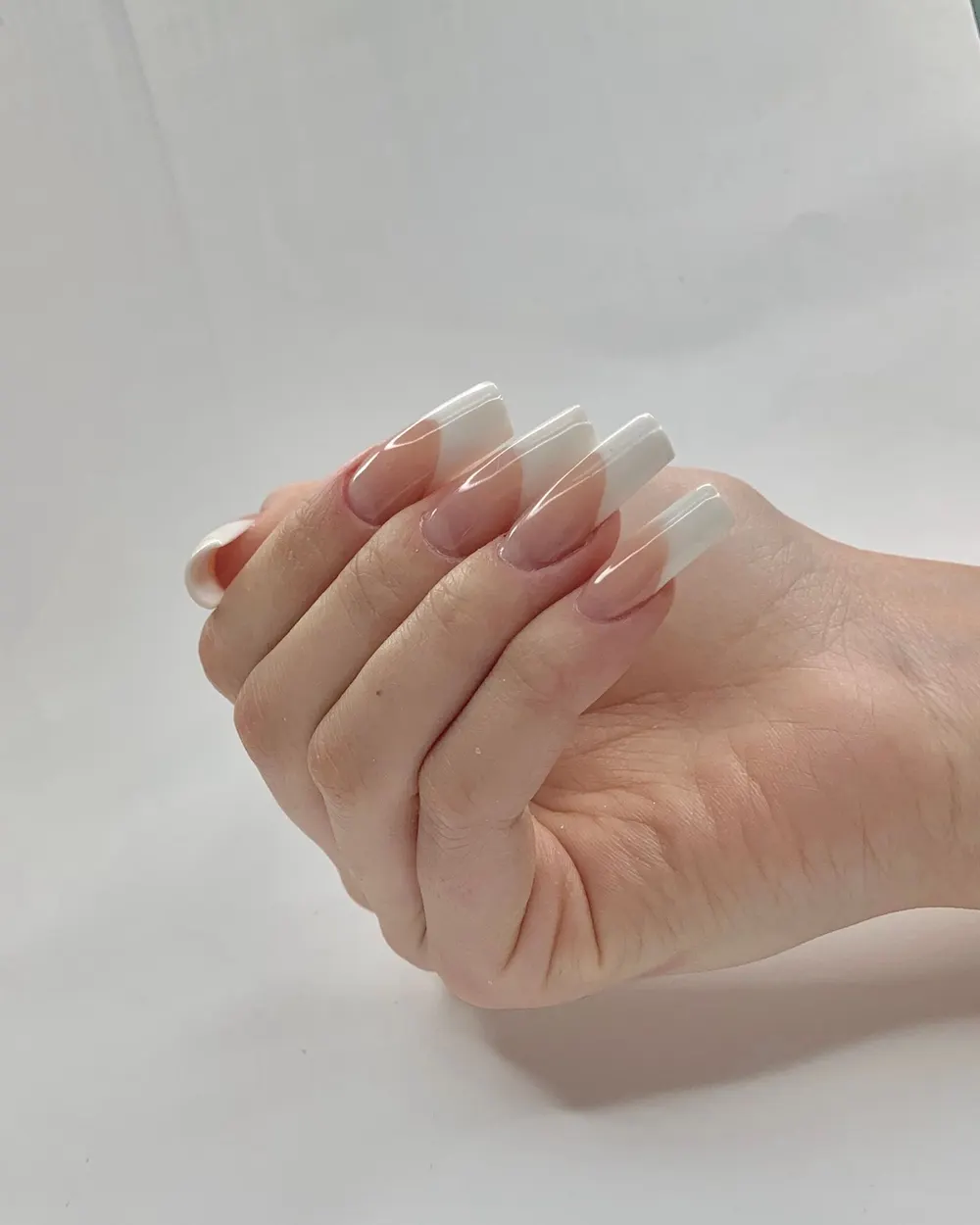
Five variations that cover almost everything asked for in the salon — from the classic to the one deliberately done short.
White tip, natural base, a clean border. It sits best at medium length on a square or slightly rounded shape. As it grows the border moves with the nail and that shows — hence a refill every three weeks.
The same design, but the tip is in colour rather than white. It forgives more than the classic: a darker tip hides an uneven line better than white, which forgives nothing.
No border — the white tip melts into the base. It is done by sponging or blending two gels while they are still wet. It takes the longest to look grown out, so it is often chosen by people who cannot get back every three weeks.
A very thin line right at the tip, barely a millimetre. It works on short nails too, where a classic french visually shortens the nail plate.
The line runs along the cuticle instead of the tip. Regrowth shows on it faster than on any other version, so it is done as a short-lived idea rather than a choice for the month.
A coloured tip does the same job as a white one, with two practical advantages. A darker line hides the small irregularities a white tip highlights, and regrowth is noticed more slowly because the eye is not looking for the border in the same place.
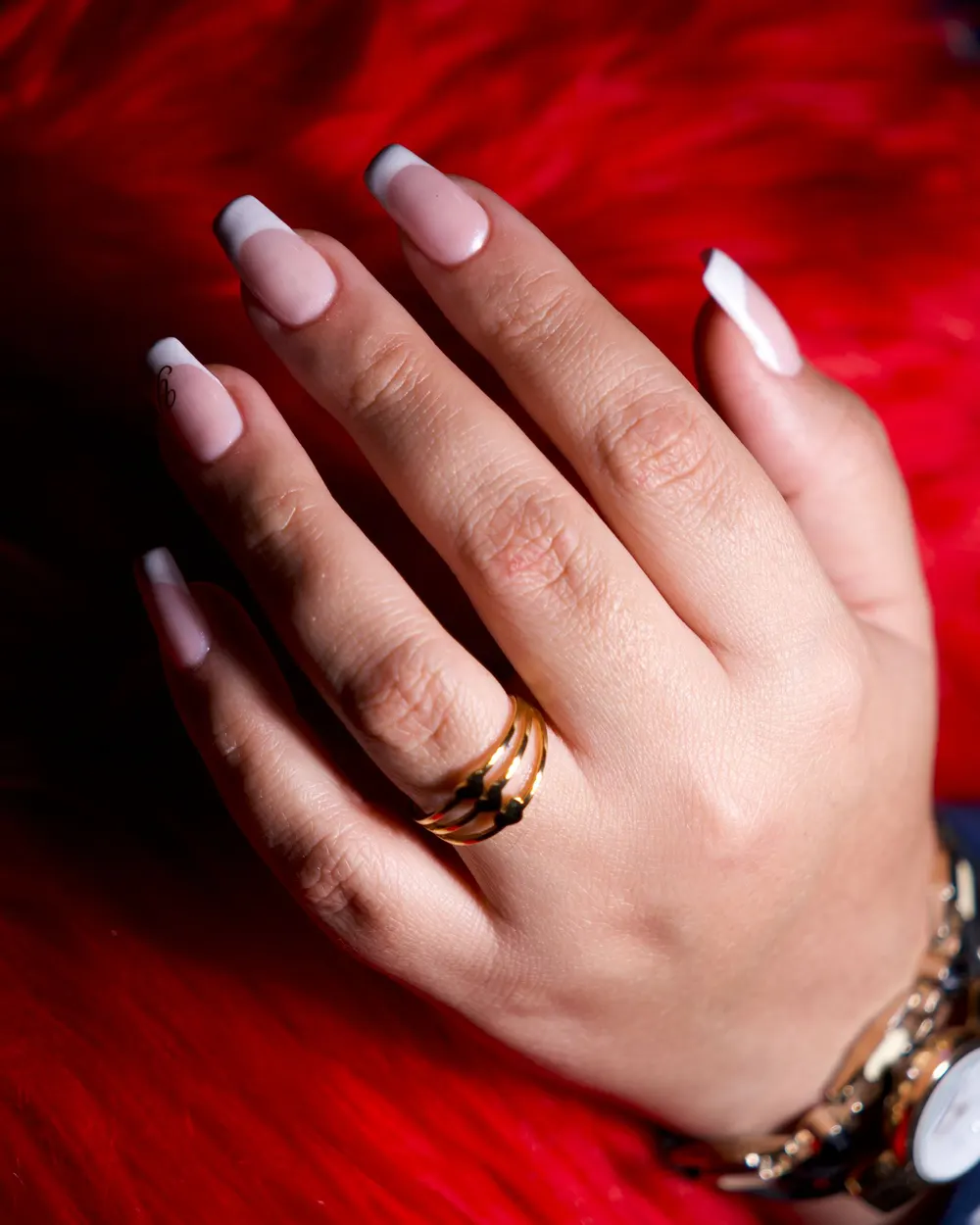
If you are choosing a colour for the first time, muted shades are the safer bet — milky, sand, dusty rose. Bright colours on the tip demand a flawless line, because every irregularity becomes a design of its own.
When you take a photo to the salon, it helps if the length and the shape are visible in it — not just the colour.
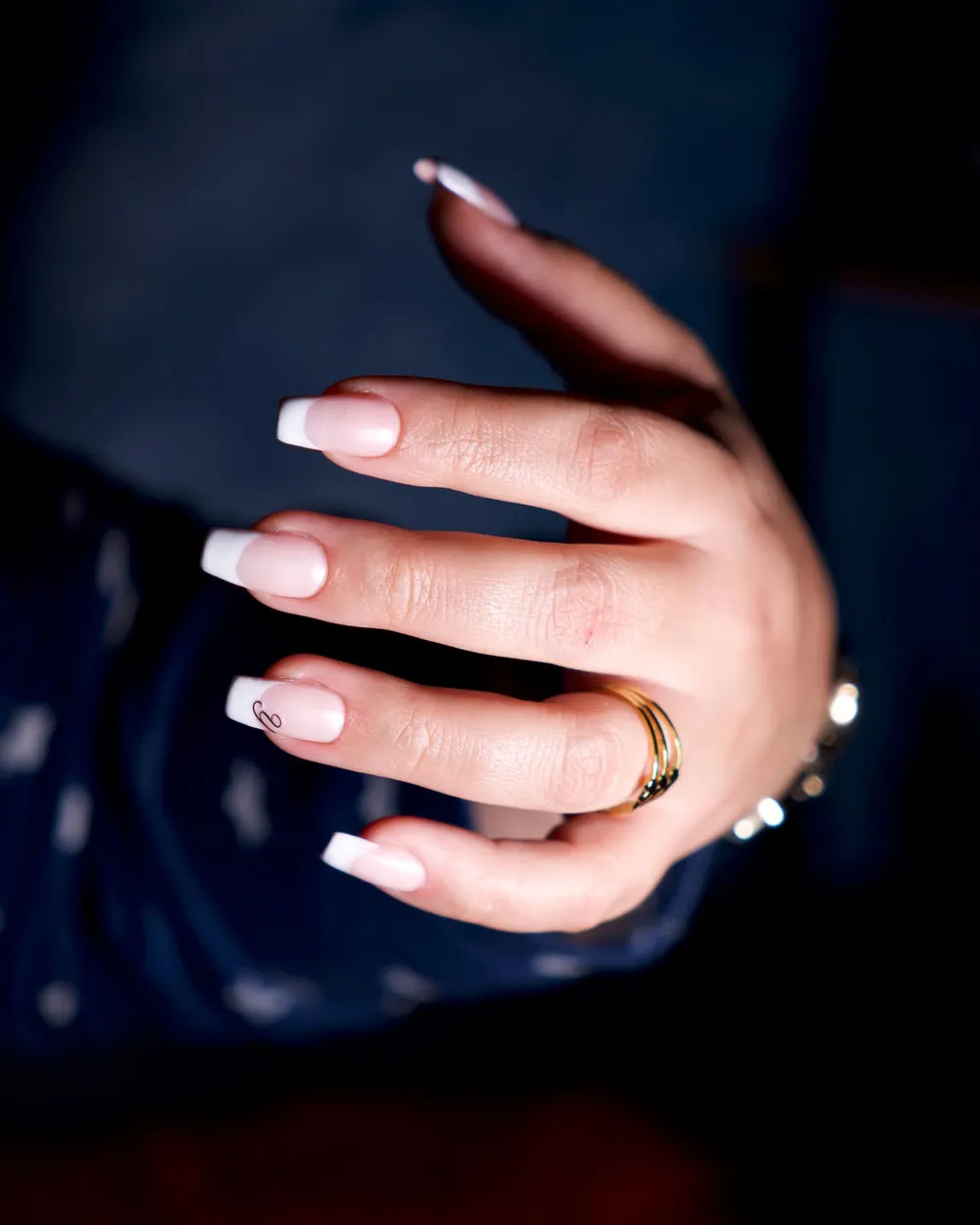
A photo taken straight after the salon says nothing about how the nails look in the third week. If you are choosing a technician, it is worth asking for a photo of grown-out work too — that shows how the line was drawn.
An older name for the same thing. In the salon people now more often say “french”, but anyone asking for a french manicure is asking for a white tip and a natural base — no difference in technique and none in price.
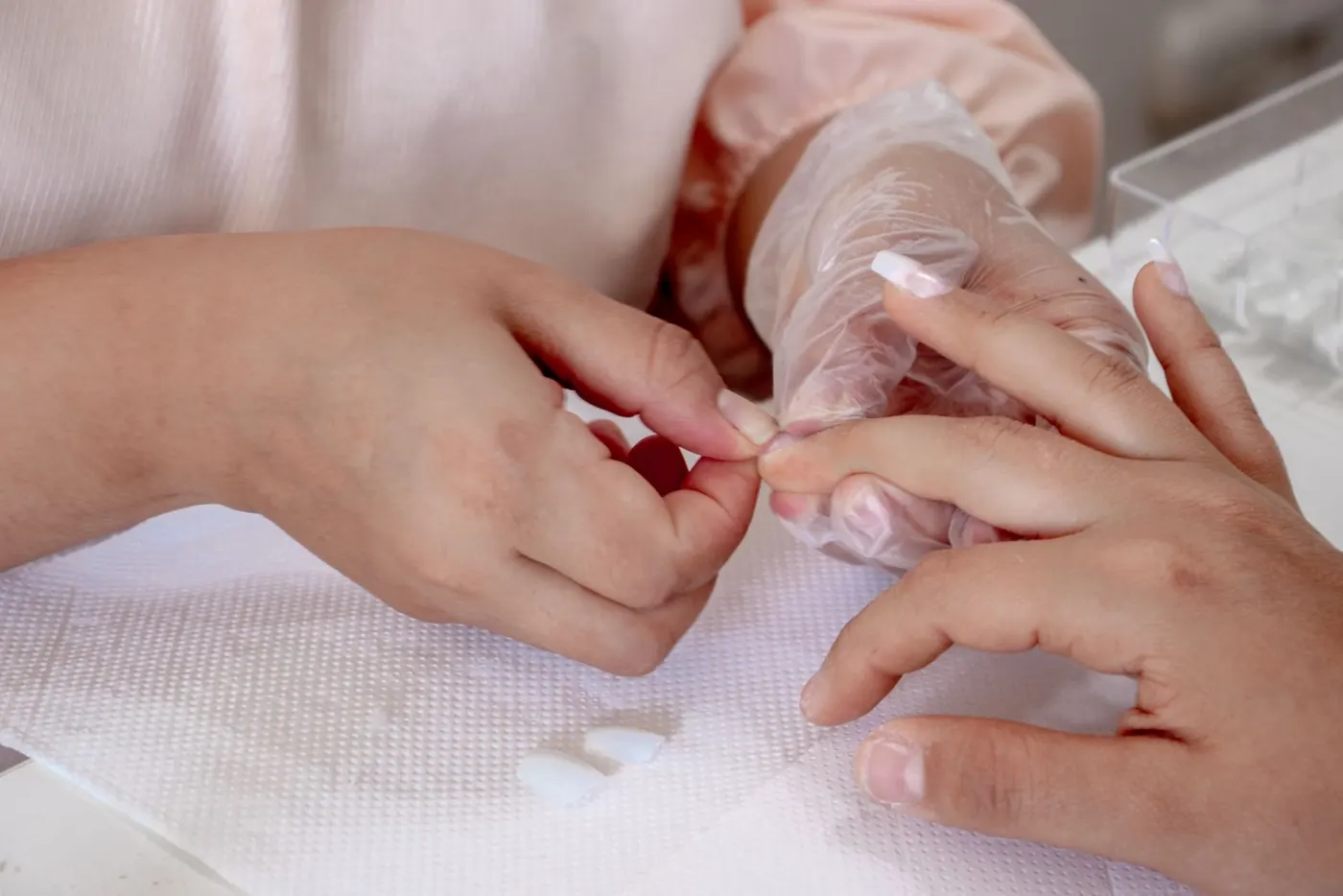
The same idea without the border: the white tip melts into the natural base, so there is no transition. It is done while the gels are still wet, by blending or sponging, and takes more time in the chair than a classic french.
The practical difference is in the regrowth. With a classic french you can clearly see after three weeks that the line has moved. With a baby boomer what moves has no clear edge, which buys a week or two more between refills.
Like any gel polish, two to three weeks. The design itself does not shorten the life, but regrowth shows sooner on a french than on a single colour, because the line moves too.
They do, but the line is drawn thinner. A wide white band on a short nail shortens the plate. For short nails a micro french or a baby boomer is the more common choice.
A french has a clear border between the tip and the base. A baby boomer has no border — the transition is diffused, so regrowth is noticed more slowly.
The same as french — an older name for a white tip and a natural base. Salons more often hear it asked for as “french”, but both names mean the same thing.
It can, with gel polish and no extensions. The length on show is then the length of your own nail, so the white line is drawn narrower than on an extended nail.
Do you run a salon? Everything about a client in one place — what she had done, with what, and when she is due back. No notebook, no scrolling through messages. Try it free