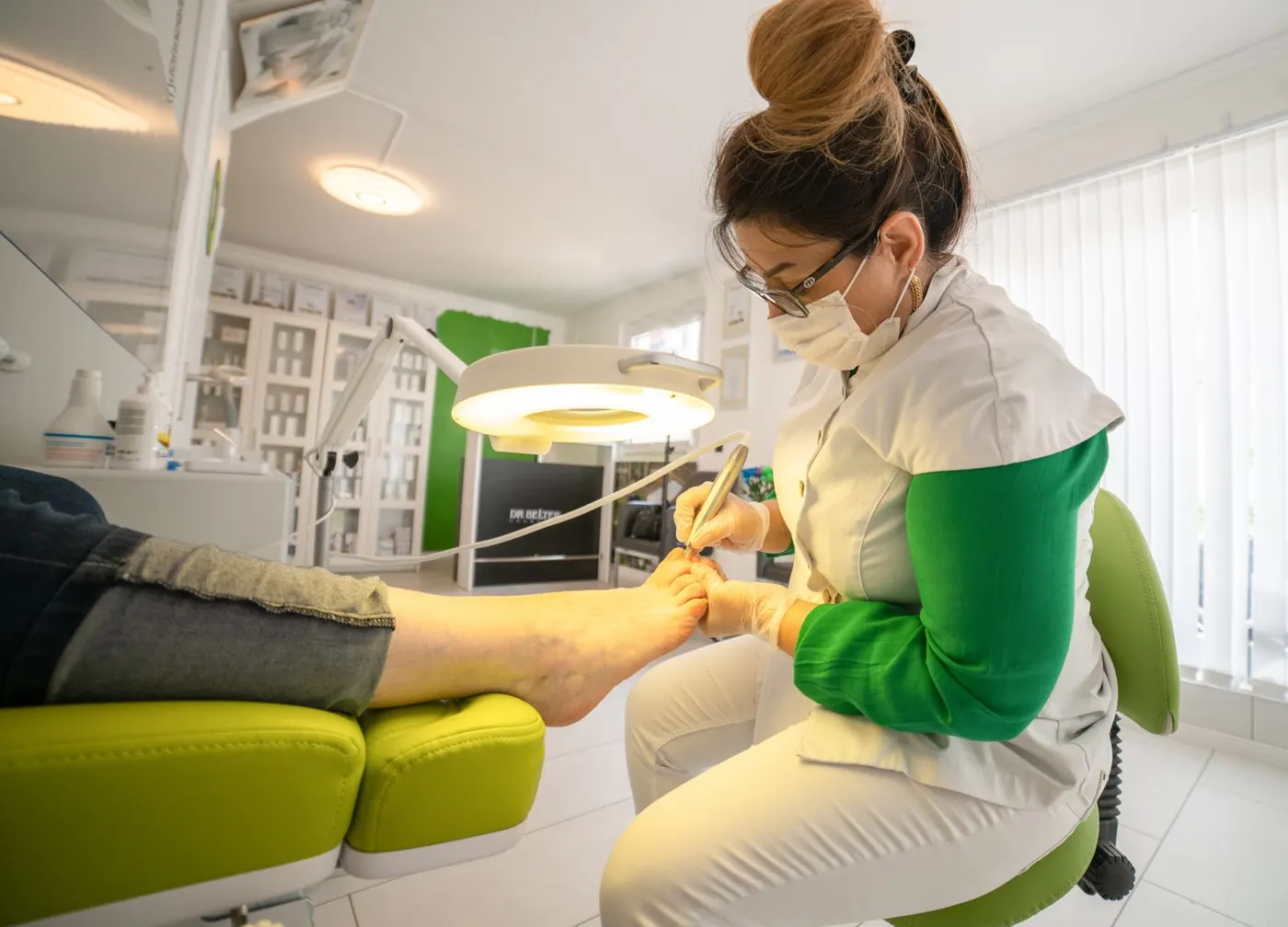
What a medical pedicure is
The foot is worked with a device fitted with rotating burrs, without soaking and without cutting living skin. The thickened layer is taken off the nail and the sole, the nail bed is cleaned and the callus is worked down. No polish goes on — not because it is forbidden, but because it would cover exactly what gets checked next time.
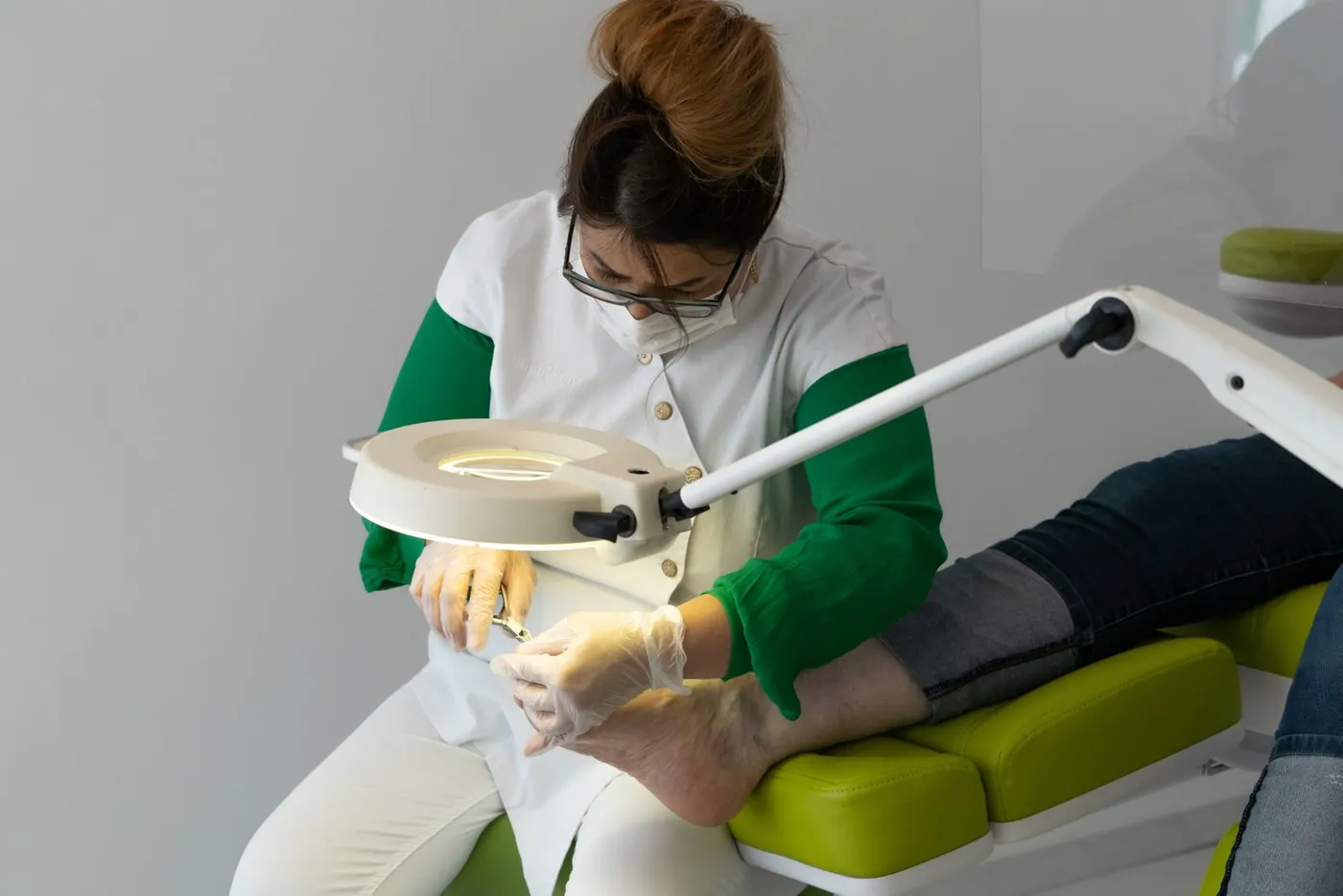
A salon doing medical pedicures sterilises its tools in an autoclave and changes the burrs between clients. That is a fair question to ask before booking, and the answer should be a simple one.
Medical pedicure price
| Medical pedicure | 2,500 – 4,500 RSD |
|---|---|
| Treating an ingrown nail | 2,000 – 4,000 RSD |
| Fitting a corrective brace | 3,000 – 6,000 RSD |
| Cosmetic pedicure | 1,500 – 2,500 RSD |
| Russian (dry, device) pedicure | 2,000 – 3,500 RSD |
The first visit is usually more expensive or longer than the ones after it, because everything that has built up comes off at once. If the salon charges per procedure rather than per treatment, it is worth asking up front what is included.
Ingrown nail
A nail whose edge grows into the soft tissue. In the salon the edge is worked and the nail bed freed, and where it keeps coming back a corrective brace or wire is fitted, lifting the edge of the nail over some weeks. That is a mechanical correction, not a procedure.
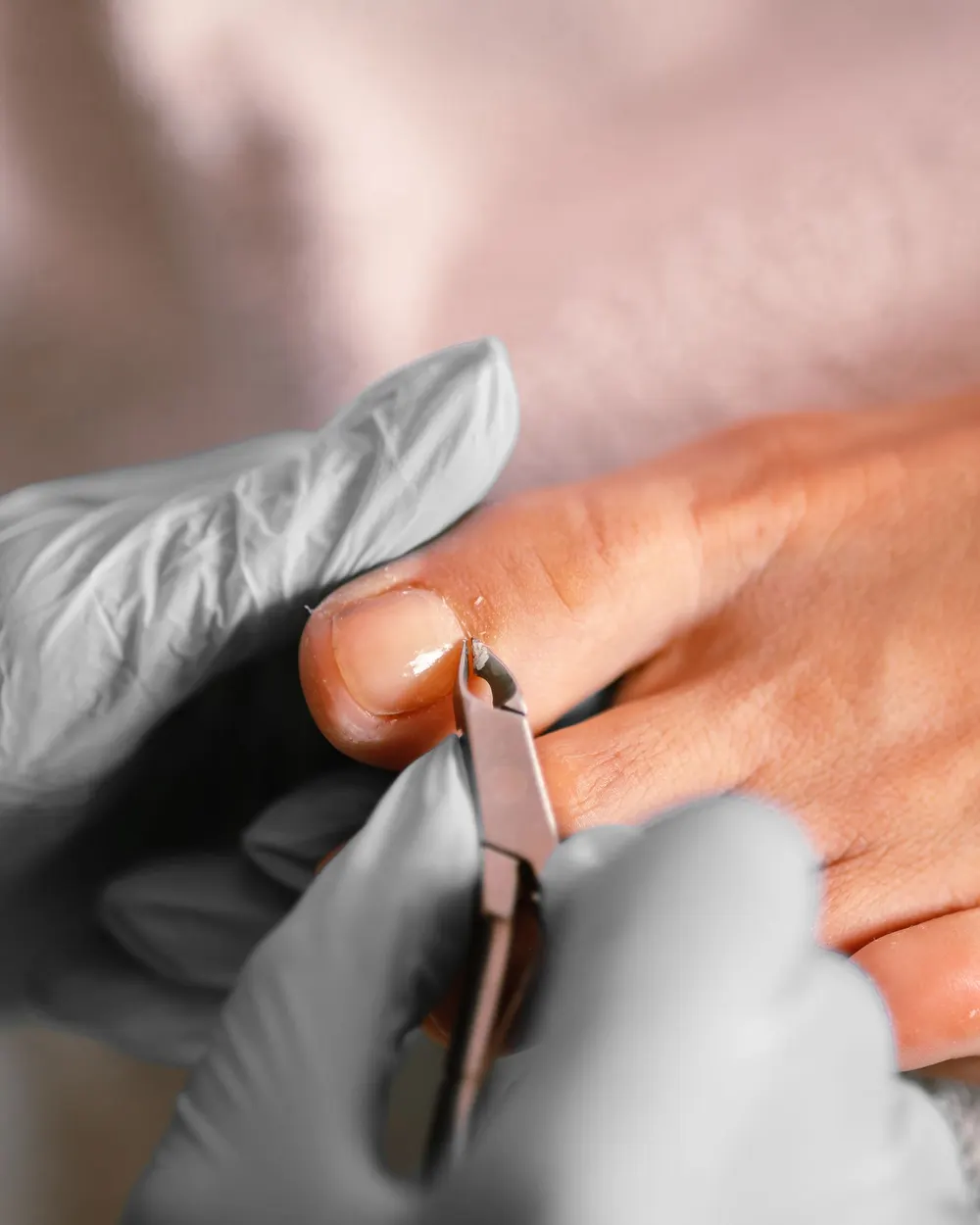
If there is redness, swelling, pus or pain on touch around the nail, this is no longer the salon's job. An inflamed ingrown nail goes to a doctor, because that is where an antibiotic or a minor surgical procedure is decided on — and neither is done in a beauty salon.
Nail fungus
A thickened, yellowish or crumbling nail lifting off its bed often is a fungal infection — but it can equally well be the result of an injury, psoriasis or pressure from footwear. The difference is not settled by the eye but by a lab result.
What the salon may do here: thin the affected nail and take off the crumbling layer. That makes sense, because a treatment prescribed by a doctor struggles to get through a thick nail. What the salon must not do: say that it is fungus, recommend a medicine, or promise that it will clear up.
The diagnosis is made by a doctor, usually after a swab or a nail scraping. Treatment runs for months because you are waiting for a healthy nail to grow out — any promise of a faster result is a sign you are drifting away from the profession.
Cosmetic pedicure
Classic grooming: soaking, scrub, cuticle work, shaping and polish. It is done on a healthy foot and the goal is how it looks. If there is a callus that keeps returning, a thickened nail or pain when walking, a cosmetic pedicure does not solve it — it only covers it for a while.
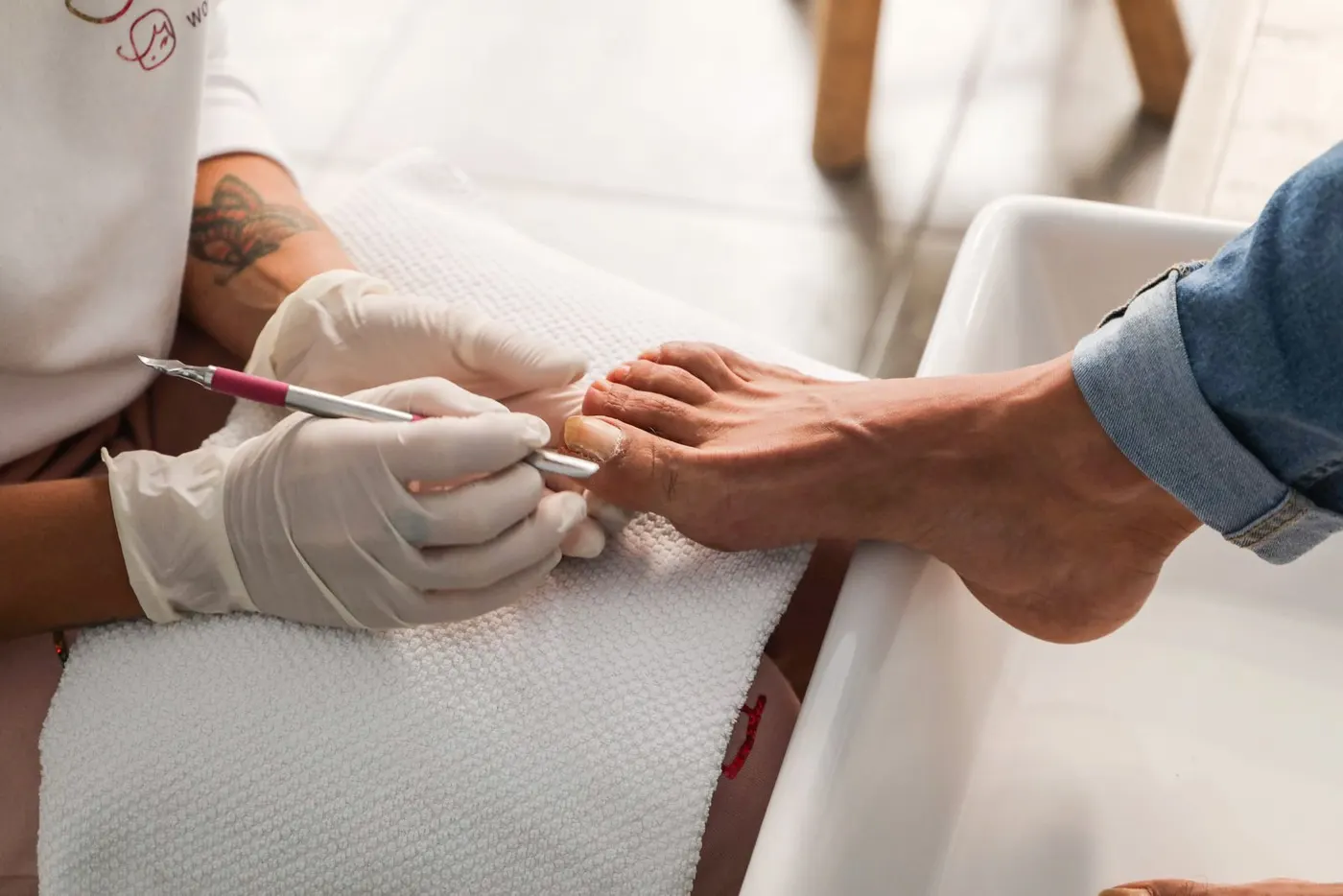
Russian pedicure
The name for dry, device-based work without soaking and without nippers on the cuticle. Technically it is close to a medical pedicure, but the goal is cosmetic: a clean line around the nail that stays tidy longer. It does not deal with the condition of the foot and does not replace a medical pedicure when there is a problem.
When to see a doctor instead of a salon
- Redness, swelling, heat or pus around the nail.
- Pain when walking that lasts more than a few days.
- A wound on the foot that will not heal.
- Diabetes, poor circulation or reduced sensation in the foot.
- A change in the colour or shape of a nail that is spreading.
- A mole or a dark line under the nail that is changing.
This guide describes what is done in a salon. It does not make a diagnosis, does not recommend treatment and does not replace an examination.
Questions people ask most often
What is the difference between a medical and a cosmetic pedicure
A cosmetic pedicure is grooming: scrub, cuticle work and polish. A medical pedicure is done with a burr device and deals with the condition of the foot — thickened nails, calluses, corns and ingrown nails. It does not include polish and it does not have to be pleasant.
Does a medical pedicure hurt
It should not. It is done without cutting living skin, with a burr over the thickened layer, which has no nerves. If it hurts, the work has gone too deep and you say so immediately.
How long does a medical pedicure take
Forty-five minutes to an hour and a half, depending on the state of the foot. The first visit is the longest because everything that has built up comes off.
How often is a medical pedicure done
Every four to eight weeks until things settle, then less often. With diabetes and with an ingrown nail the rhythm is set by a doctor, not by the salon.
Does a medical pedicure cure fungus
No. The salon can thin and work down an affected nail, which helps a cream or lacquer prescribed by a doctor penetrate better, but the work itself does not remove the cause. Treatment is decided by a doctor, and only after a confirmed diagnosis.
Can people with diabetes have a pedicure
They can, but not in every salon and not without their doctor knowing. With diabetes sensation in the foot is reduced so an injury is not felt, and wounds heal slowly. Look for a salon that works with the condition, and say so before the treatment.
Do you run a salon? Everything about a client in one place — what she had done, with what, and when she is due back. No notebook, no scrolling through messages. Try it free