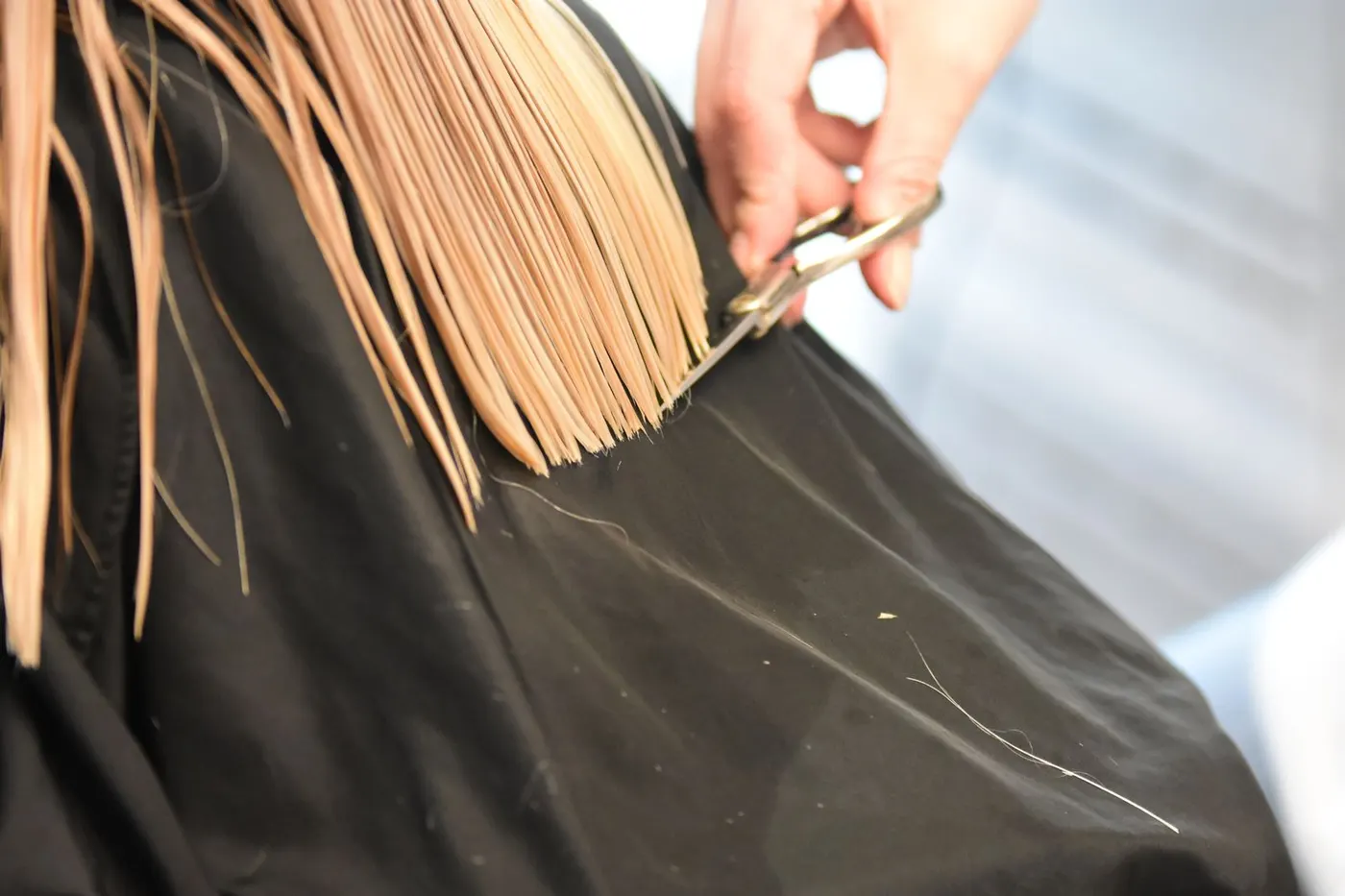
Six cuts from the bob to the pixie, along with what is actually agreed in the salon: where the line stops, how often it needs upkeep and which cut suits which hair.
Last checked: August 2026
Short haircuts — six cuts
These six cover almost everything that gets asked for. The difference between them is not only length but how much morning time each one asks of you.
Bob
One length to the jaw or a little below, with the parting wherever you like. The most requested short cut and the safest first step — short enough for the change to register, long enough to still gather into a ponytail.
Best onStraight and lightly wavyRefreshEvery 6 to 8 weeks
Graduated bob
The same cut, but shorter at the back than at the front. The back lifts and gives volume exactly where the hair falls flattest.
Best onFine, sparse hairRefreshEvery 5 to 6 weeks
Pixie
Short all over, with a longer top that gets styled. The boldest cut and the one that depends most on the shape of the head and neck — how much is left on top is agreed in the salon.
Best onThick, strong hairRefreshEvery 4 weeks
Shag
Layers through the whole length and a fringe that opens up. A deliberately undone look — the hair is dried with the fingers and asks for no iron.
Best onWavy and curlyRefreshEvery 8 weeks
Undercut nape
The back is taken short and stays hidden under the top layer. It takes weight out of thick hair, and from the outside nothing looks cut away.
Best onVery thick hairRefreshEvery 4 to 6 weeks
Long bob
To the shoulders, a straight line without layers. The step between long and short hair — what people ask for when they are not sure they dare go shorter.
Best onAlmost any hairRefreshEvery 8 to 10 weeks
The bob
A bob is one length that stops somewhere between the ear and the shoulder. The whole conversation in the salon comes down to a single question — where exactly the line stops. Above the jaw it opens the neck and reads sharper, at the jaw it softens, below the jaw is the safest choice the first time you cut it.
The same cut looks different depending on where the line stops — you show that with a finger, not with words.
A straight line without layers needs hair that falls. On wavy and thick hair the same line lifts and the cut takes on a triangular shape — hence the graduated bob, which deliberately shortens the back.
The pixie
Short all over, with a longer top combed to the side or forward. The pixie is the only cut on this list that cannot be tied back, so the decision is not made on how it looks in a photo but on everyday life.
With a pixie you agree how much stays on top. That is the only length that can still be changed later.
The pixie falls apart faster than anything else — after four weeks the top drops and the cut loses its shape. If a monthly salon visit is not realistic, the bob is the more honest choice.
Women's haircuts — by hair type
The same cut on two different heads of hair gives two different results. This is what gets checked in the salon before the scissors.
Fine, sparse hair
A graduated bob — volume at the back
Avoid long layers, they thin it out further
Very thick hair
An undercut nape takes weight out and does not show from outside
A straight line with no thinning makes a triangle
Wavy and curly
Shag and layers — the wave gets shape instead of bulk
Cut dry, because wet hair shortens once it dries
Coloured hair
Cut first, then colour — ends that are coming off do not get coloured
A short cut reveals regrowth at the parting sooner
Short haircut photos
When you take a photo to the salon, it helps if the profile and the back are visible — from the front almost all short cuts look alike.
The cut is agreed in the chairBob, line at the jawPixie, longer top
In photographs the hair has always just been styled. The honest question to ask is: what does this cut look like dried with the fingers, with no iron — the answer changes the choice more often than you would expect.
How long a short haircut lasts
A short cut does not grow out evenly. The back grows more slowly than the sides, so after six weeks the shape is gone even though the length is still respectable. That, rather than the length itself, is why short cuts are refreshed more often than long hair.
If you plan to grow it out, arrange to have the layers evened every two months rather than simply waiting. Growing it out without a single salon visit is the longest and ugliest road to long hair.
Questions people ask most often
Who do short haircuts suit
It depends more on the neck and the jawline than on the face. A longer neck carries almost any short cut; with a shorter neck a bob that stops below the jaw sits better than a pixie that exposes the neck entirely.
How often does a short haircut need upkeep
The pixie falls apart fastest — every four weeks. A bob holds six to eight, because with one length the regrowth only shows once the line drops below the shoulders.
What is the difference between a bob and a pixie
A bob is one length to the jaw and can still be gathered up. A pixie is short all over, with a longer top, and cannot be tied back — that is the difference you feel most in everyday life.
Do short haircuts suit wavy hair
They do, but you want a cut with layers — a shag or a graduated bob. A straight line on wavy hair lifts and the cut takes on a triangular shape.
What do I say so the hairdresser does not cut off too much
Say where exactly you want the line to stop — point at your neck or jaw with a finger. Everyone understands the word “short” differently, and length that is cut off does not come back until next season.
Can a short cut be grown out without an ugly in-between stage
It can, if the layers are evened out every two months instead of simply waiting. The worst part of growing out is the back, which grows more slowly than the sides.
Do you run a salon? Everything about a client in one place — what she had done, with what, and when she is due back. No notebook, no scrolling through messages. Try it free