In the chair
The strongest peroxide concentration, with sealed gums and supervision. One appointment of an hour to ninety minutes. The most expensive option, and the only one that delivers a large change at once.
WhereDental practiceResultSame day
Guide · Clinic / practice
A gel that breaks down pigment inside the enamel rather than painting over it. Here is how the appointment goes, how many shades you realistically gain, what stays unchanged, what it costs and why teeth can be sensitive for a day or two afterwards.
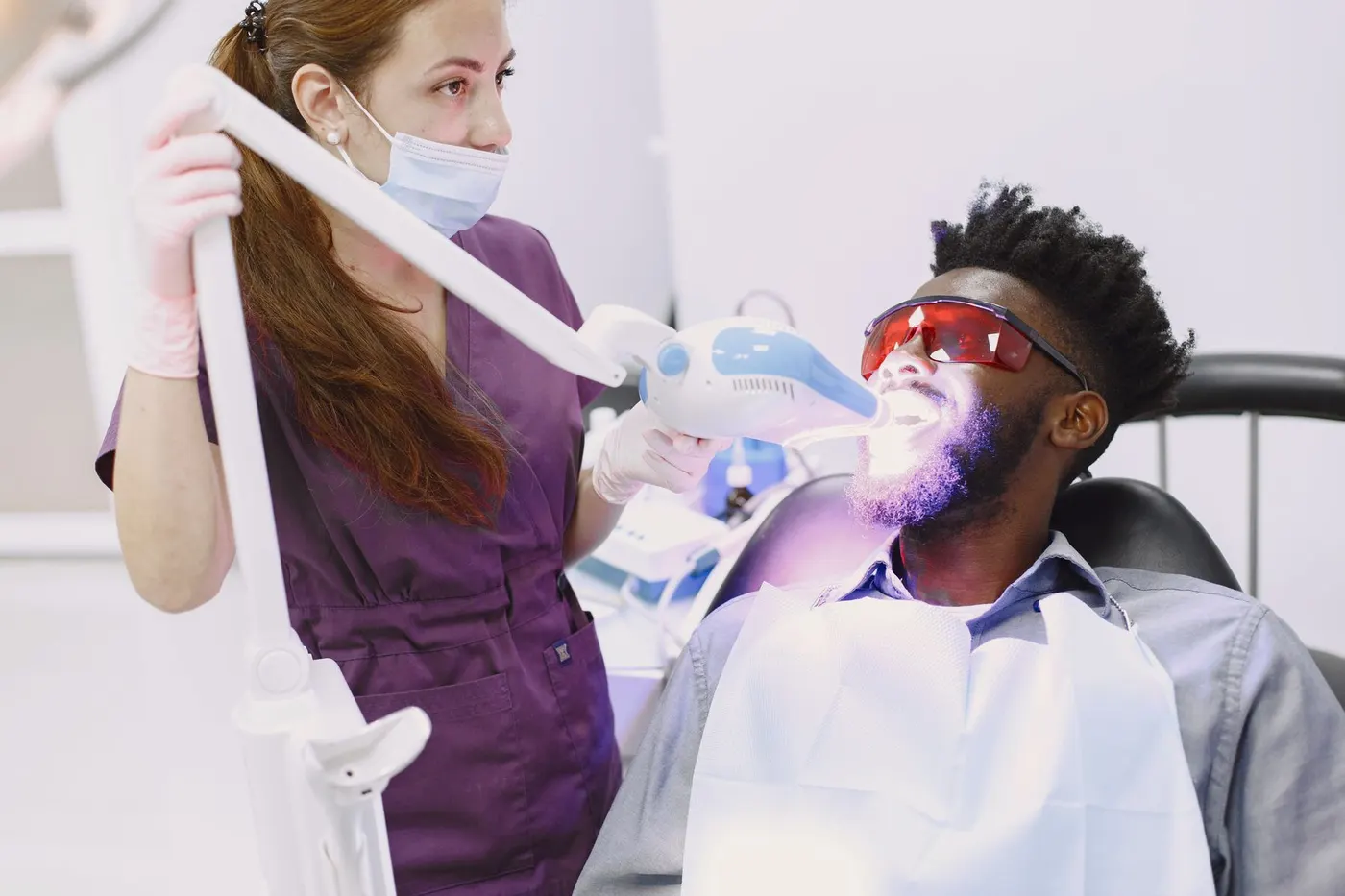
A gel based on hydrogen or carbamide peroxide is applied to the teeth. It does not coat the tooth with colour — it passes through the enamel into the dentine and breaks apart the pigment molecules that have built up there over years of coffee, tea, red wine and tobacco. The result is not a layer on the tooth, it is the tooth without that pigment.
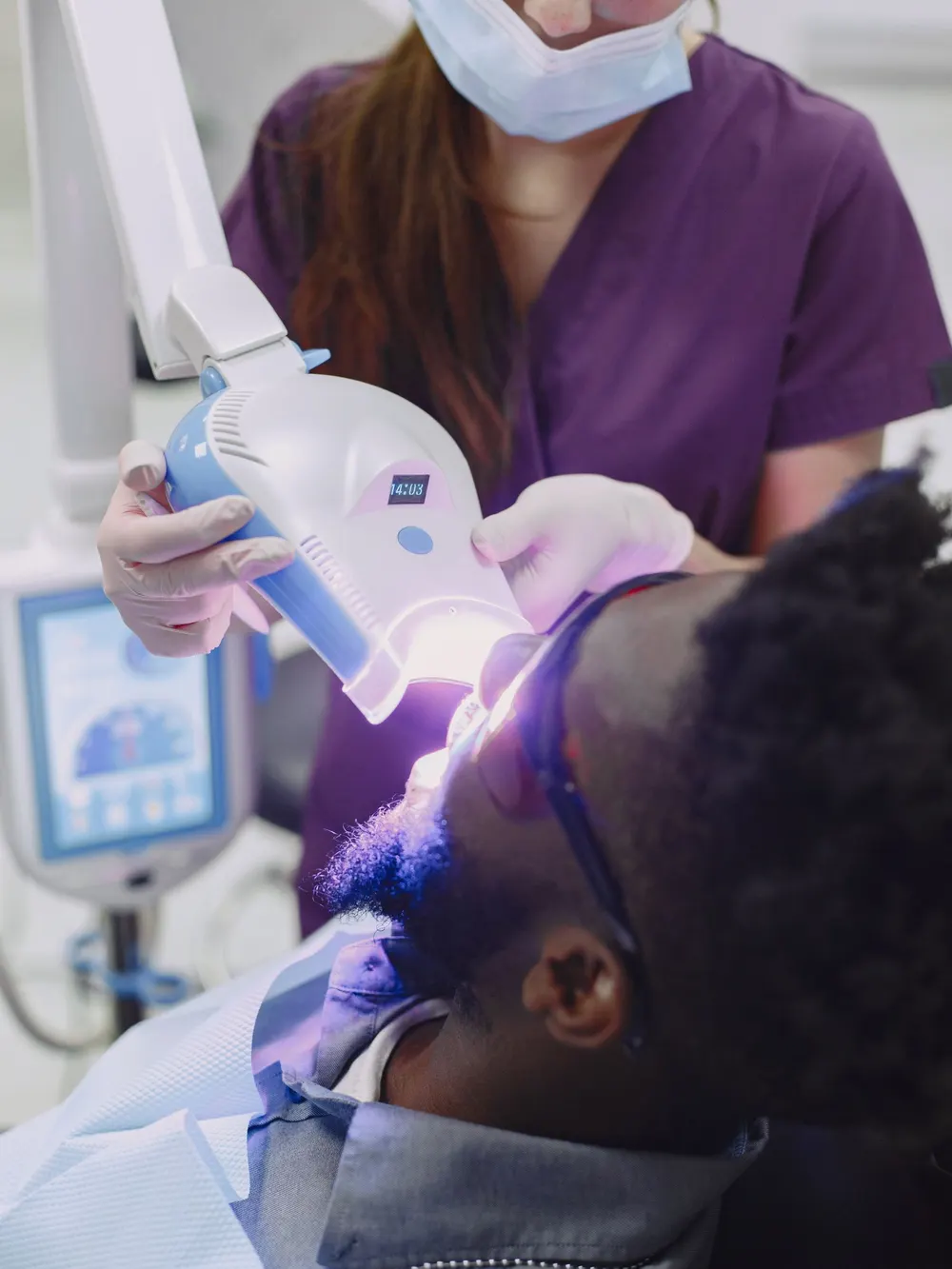
Isolation comes first: the gums are covered with a protective resin so the peroxide never touches soft tissue. The gel is then held in cycles of fifteen to twenty minutes, usually three of them, with a lamp speeding up the reaction. The whole appointment runs an hour to ninety minutes and the result shows the same day.
Four things people use the same word for, although they do three different jobs — and only two of them actually change the shade of the tooth.
The strongest peroxide concentration, with sealed gums and supervision. One appointment of an hour to ninety minutes. The most expensive option, and the only one that delivers a large change at once.
The dentist takes an impression and makes trays fitted to your teeth; a weaker gel is worn about an hour a day. Slower, but more even and gentler on sensitivity — often used to continue after an in-chair session.
Ready-made strips with a low concentration. They work on surface staining and nothing more, and because they do not follow the shape of the tooth, edges and gaps stay darker.
It does not whiten; an abrasive removes surface film, so the tooth looks cleaner at the same shade. Used daily, the more abrasive pastes thin the enamel — which makes teeth darker over time, not lighter.
Baking soda, activated charcoal and lemon belong to no row of this table. They do not break down pigment, they scratch enamel — and enamel does not grow back.
The shade is measured with a guide the dentist holds against the tooth before and after. A realistic in-chair change is two to four shades, up to six where staining is heavy. It is a measurable difference that shows in a photograph, but it is not the colour from an advert — teeth stay teeth, not porcelain.
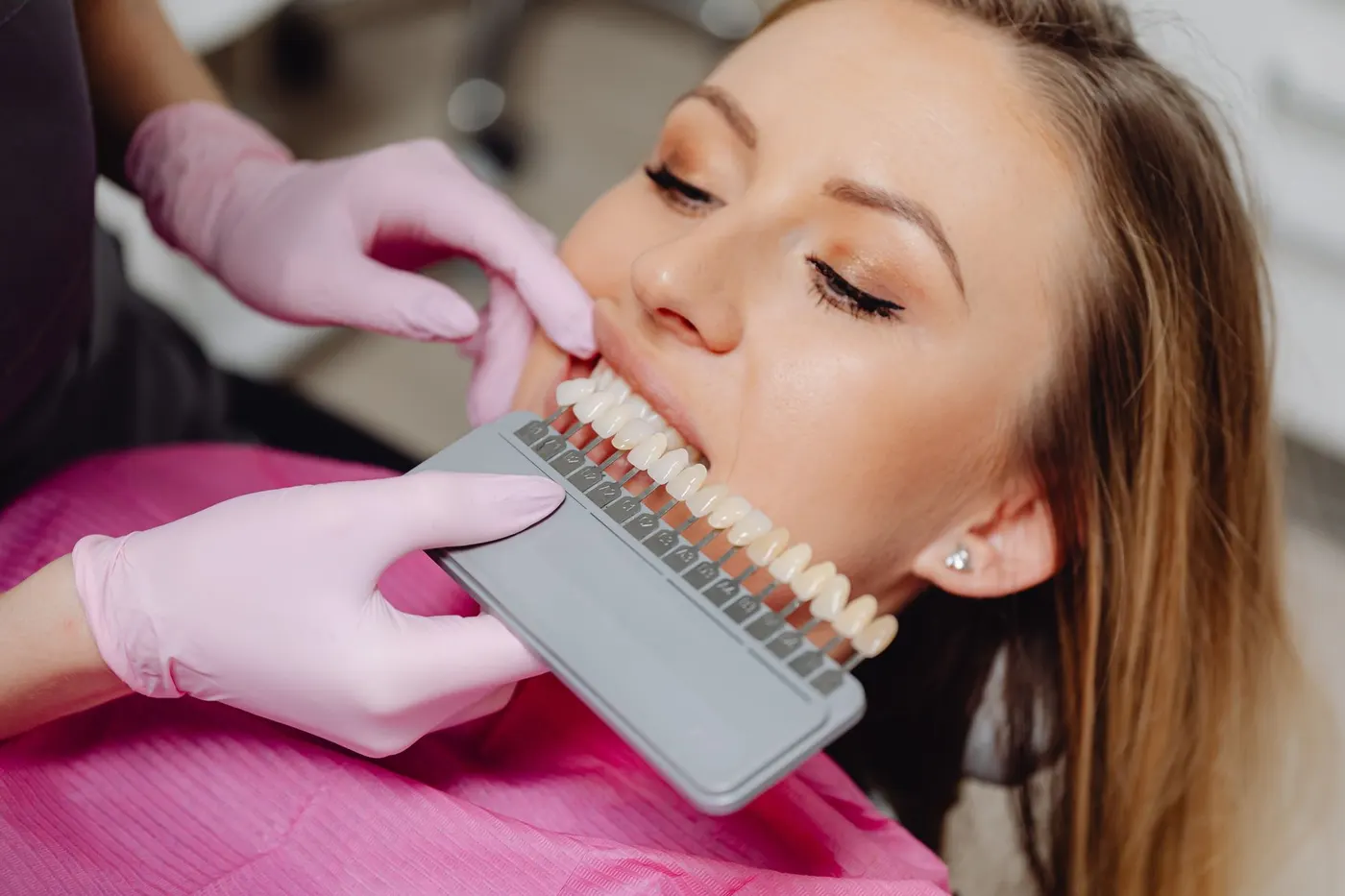
How much you gain depends on where you start. Yellowish tones respond best and fastest. Greyish ones, especially from tetracycline taken in childhood, respond poorly and need more sessions for a smaller change — a conversation to have before the first gel, not after it.
Peroxide only acts on natural tooth tissue. Fillings, crowns, bridges and ceramic veneers keep their colour — if they were once matched to a darker shade, they will stand out against the whitened teeth around them. On visible front teeth that is a common reason an old filling is replaced after whitening.
That is why whitening comes BEFORE a new filling in the visible zone, never after: the shade of the restoration is matched to a tooth that has already been lightened.
Ranges from practices in Serbia, August 2026. Kromea does not handle payments — every practice sets its own price.
| In-chair whitening, both arches | 12,000 – 30,000 RSD |
|---|---|
| Single arch | 7,000 – 15,000 RSD |
| Custom trays with take-home gel | 8,000 – 18,000 RSD |
| Refill gel for trays | 1,500 – 4,000 RSD |
| Scaling and polishing beforehand | 3,000 – 6,000 RSD |
Scaling is not a line added to inflate the bill — gel does not pass through deposits. Whiten over tartar and the clean surfaces lighten while a darker band stays hidden underneath, showing up only once the tartar is removed.
Sensitivity after whitening is common and expected: peroxide temporarily opens the fine tubules in the dentine, so hot and cold reach the nerve faster. It lasts anywhere from a few hours to two days and passes on its own. Toothpaste for sensitive teeth, started a week before the appointment, noticeably reduces it.
The enamel itself is not worn away by a controlled treatment — it is worn away by repeating too often and by abrasive home tricks. That is why whitening is not done every three months, and why an examination comes first: decay, a cracked filling or receding gums all give the peroxide a path to somewhere it should not reach.
It is not done during pregnancy or breastfeeding, nor on teeth with untreated decay or inflamed gums. That is not a formality — it is an order of operations.
For the first 48 hours the enamel takes on new pigment most easily, and this is the only part that really depends on the patient. A „white diet” in that window means no coffee, black tea, red wine, beetroot or berry juice, ketchup or cigarettes. Whatever would stain a white shirt will stain a tooth.
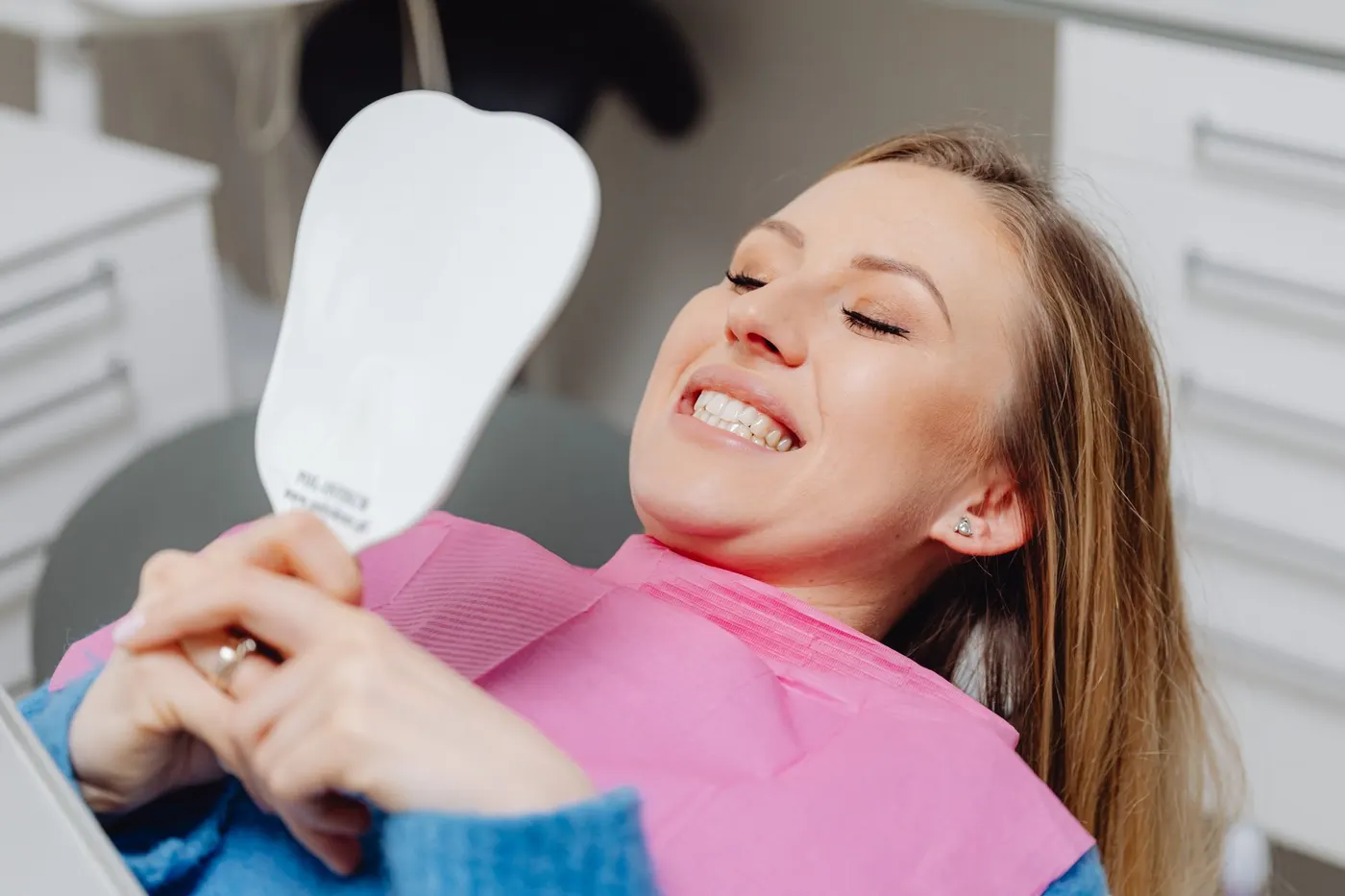
The effect holds six months to two years. The range is that wide because it is set by what you drink and smoke, not by the treatment. With daily coffee and no pause it fades towards the lower end; topping up is then done with take-home trays, which costs less than another appointment in the chair.
One appointment runs an hour to ninety minutes, with three gel cycles of fifteen to twenty minutes each. The result shows the same day and the final shade settles over two to three days as the enamel rehydrates.
A controlled treatment with sealed gums does not wear enamel down. Repeating it without pause and abrasive home tricks — soda, charcoal, lemon — do. That is why an examination comes first and why it is not repeated every three months.
In the chair, for both arches, from 12,000 to 30,000 dinars; custom trays with take-home gel from 8,000 to 18,000. Scaling is charged separately and done first, because gel does not pass through deposits.
From six months to two years. Coffee, red wine and cigarettes make the difference, not the treatment itself. Topping up is usually done with take-home trays rather than a new appointment.
No. Peroxide only acts on natural tooth tissue, so fillings, crowns and veneers keep their shade. In the visible zone they are often replaced after whitening so they match again.
It does not change the shade of the tooth. An abrasive removes surface film, so the tooth looks cleaner. The more abrasive pastes, used daily, thin the enamel — and thinner enamel shows more of the yellow dentine underneath.
Do you run a salon? Everything about a client in one place — what she had done, with what, and when she is due back. No notebook, no scrolling through messages. Try it free