HIFU
Focused ultrasound heats points in the deeper layers without touching the surface. The skin answers those points by building new collagen over the following two to three months.
Depth1.5 – 4.5 mmWorks onTightening
Guide · Aesthetic salon
Focused ultrasound that heats the deeper layers of the skin and leaves the surface untouched. Here is how it works, when the result actually shows, how it differs from dermapen and mesotherapy, and who should not have it.

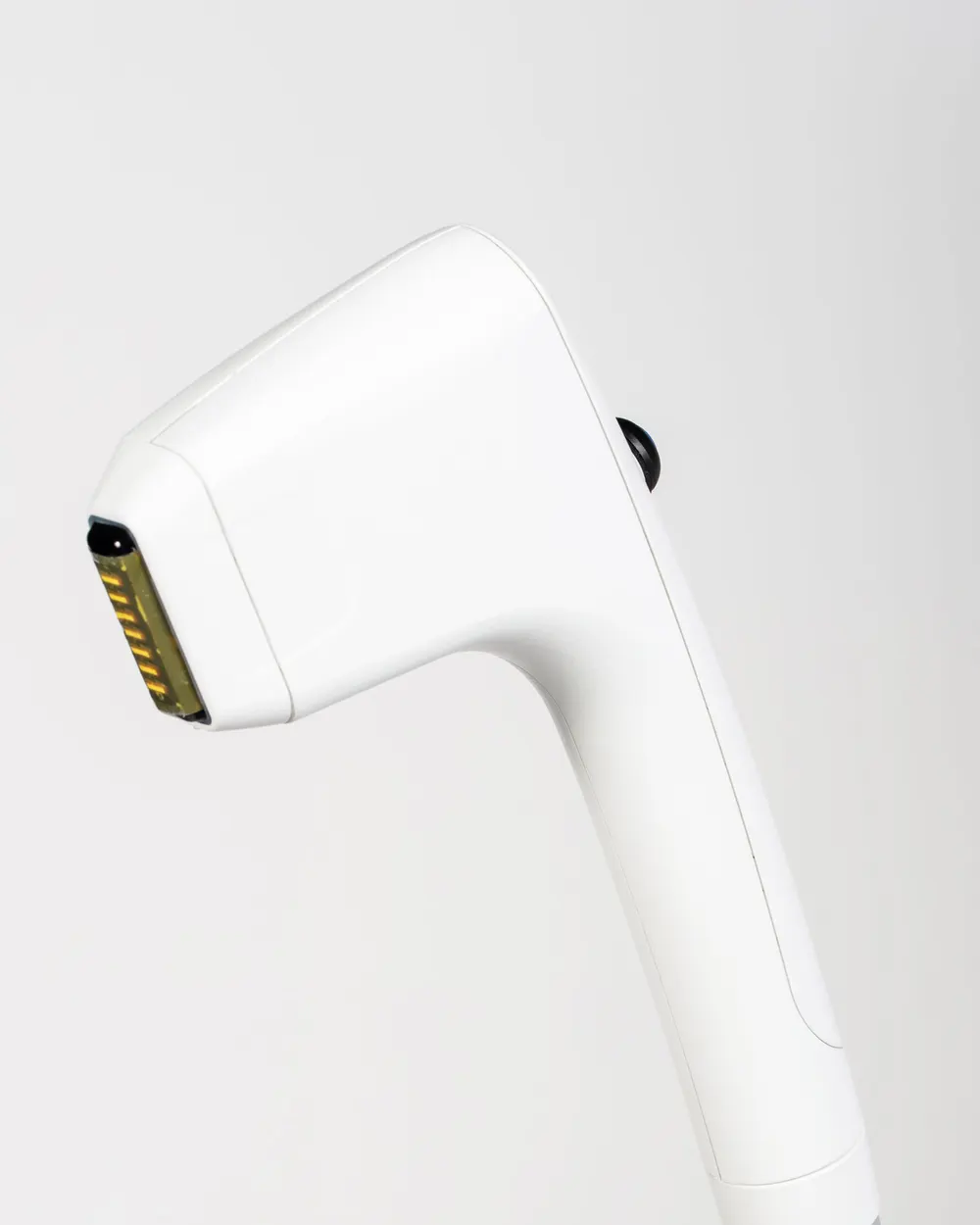
The head of the device sends ultrasound focused into a point at a precise depth — from one and a half to four and a half millimetres. At that point the tissue briefly heats and contracts, while the top layer of skin stays untouched. That is why there is no wound afterwards, and no result straight away either.
What you see in the mirror right after the treatment is swelling, not the effect. New collagen builds over eight to twelve weeks, and that is the only timeframe by which the result should be judged.
The most common comparison and the most common confusion — two devices working at different depths on different problems.
Focused ultrasound heats points in the deeper layers without touching the surface. The skin answers those points by building new collagen over the following two to three months.
Fine needles create controlled micro-injuries in the surface layer. It works on acne scars, enlarged pores and fine texture — it does not tighten.
A cocktail with hyaluronic acid is delivered into the skin. It gives glow and plumpness, shows quickly and lasts a short time — months, not years.
Heating with a broad beam rather than in points. A milder effect than HIFU, but more comfortable and done in a course rather than one pass.
If the problem is a softening jawline, dermapen will not help. If the problem is scars and pores, HIFU will not touch them. A salon offering one device for everything is selling a device, not a solution.
No single treatment covers everything. Texture, pigmentation, volume loss and laxity are four different things and ask for different approaches — which is why a salon builds a plan in stages rather than one appointment.
What still gives the most for the least money is boring: sun protection every day, sleep and stopping smoking. No device makes up for their absence, and an honest salon says so before charging for a course.
A cocktail of hyaluronic acid and vitamins delivered into the surface layer of the skin. The effect is glow and hydration, it shows quickly and lasts a short time — measured in months. It is often combined with HIFU because it works on something else: HIFU tightens the depth, mesotherapy refreshes the surface.
Anything that breaks the skin with a needle is a procedure and requires a qualified professional with the appropriate licence. Who is allowed to do it is set by law, not by the salon — and that is a fair question to ask before booking.
HIFU tightens the skin that is already there. A surgical lift removes the excess and moves tissue. Those are different things and do not substitute for one another — on markedly lax skin HIFU gives a shift that is barely visible in the mirror.
The best candidate for HIFU is skin that is only starting to give way: a slightly blurred jawline, dropping brows, a soft neck. The earlier it is caught, the more there is to gain.
This is not a complete list. The salon takes a history before the treatment, and with any illness, medication or recent procedure the decision belongs to a doctor. This guide describes the treatment and does not replace an examination.
Focused ultrasound heats tiny points in the deeper layers of the skin, skipping the surface. Over the following two to three months the body replaces those points with new collagen, and the skin gradually tightens.
Something shows immediately because of swelling, but that is not the result. The real effect comes gradually over eight to twelve weeks, and is strongest around the third month.
About a year to a year and a half, then it is repeated. It does not stop ageing — it buys time, and on skin that is already markedly lax it gives less than people expect.
It feels like brief warm pinpricks deep down, stronger along the jaw and on the forehead where the bone is close. Most people do not need anaesthetic, but it is not comfortable.
It is not. A surgical lift moves and removes skin; HIFU only tightens it. Where there is a pronounced excess of skin, HIFU will not give the expected result and an honest salon will say so up front.
A few days without sauna, gym and sunbeds, and sun protection. Swelling and tenderness to the touch last up to a week and are expected.
Do you run a salon? Everything about a client in one place — what she had done, with what, and when she is due back. No notebook, no scrolling through messages. Try it free